
Brick & Masonry Repair
Flaking faces, popped bricks, white stains, a stack that isn't quite plumb — we replace damaged brick with matched units, fix the water problem behind it, and leave a wall that looks like nothing ever happened.
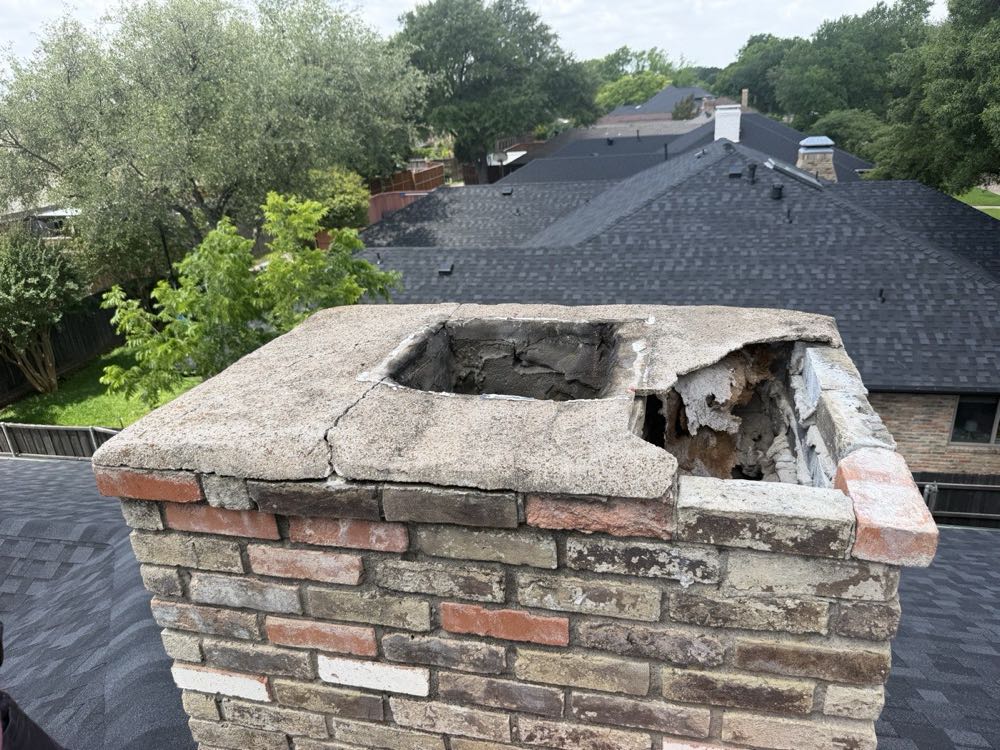
What is spalling — and why is your brick falling apart?
Spalling is masonry's most visible cry for help: the outer face of a brick flakes, pits or pops clean off, leaving a raw, crumbly core exposed. The mechanism is simple physics. Brick is porous — it absorbs water from every DFW storm — and when a winter cold snap freezes that trapped moisture, the water expands roughly nine percent. That expansion happens just behind the brick's hard fired face, and after enough freeze–thaw cycles the face shears off. Water is the villain in every masonry story, and spalling is the chapter where the damage stops being invisible.
North Texas piles on a second stress most regions don't have: expansive clay soil. Our clay swells when it rains and shrinks in the summer drought, rocking foundations — and the chimney, the heaviest and most rigid column on the house, feels every move. Soil movement opens hairline cracks, cracks admit water, freezes turn water into wedges, and hail-season storms drive more rain into every new opening. That cascade is why a chimney can look fine in spring and shed brick faces by February.
Partial replacement, matched brick
The good news: spalled masonry rarely means a full rebuild. We cut out the damaged units, then set replacement brick matched by size, color range and texture, blended across the repair area and pointed with color-matched mortar so the repair disappears into the original wall. For discontinued or historic brick we can often harvest matching units from a hidden face of the stack. Just as critical, we fix the water source — crown, cap, flashing or unsealed brick — because replacing brick without stopping the water is renting the repair, not owning it.
Efflorescence and leaning stacks — read the warnings
Two signs deserve special respect. Efflorescence — that chalky white bloom on the brick — is minerals left behind as water migrates through the masonry and evaporates; it's harmless powder announcing a harmful process. And a leaning stack is never cosmetic: whether it's failed upper joints or clay-soil movement at the base, a multi-ton column drifting off plumb needs a professional assessment now, not next season. Every job gets before-and-after photos, an upfront price, and workmanship held to CSIA and NFPA-informed standards — the same care we bring to tuckpointing the joints between those bricks.
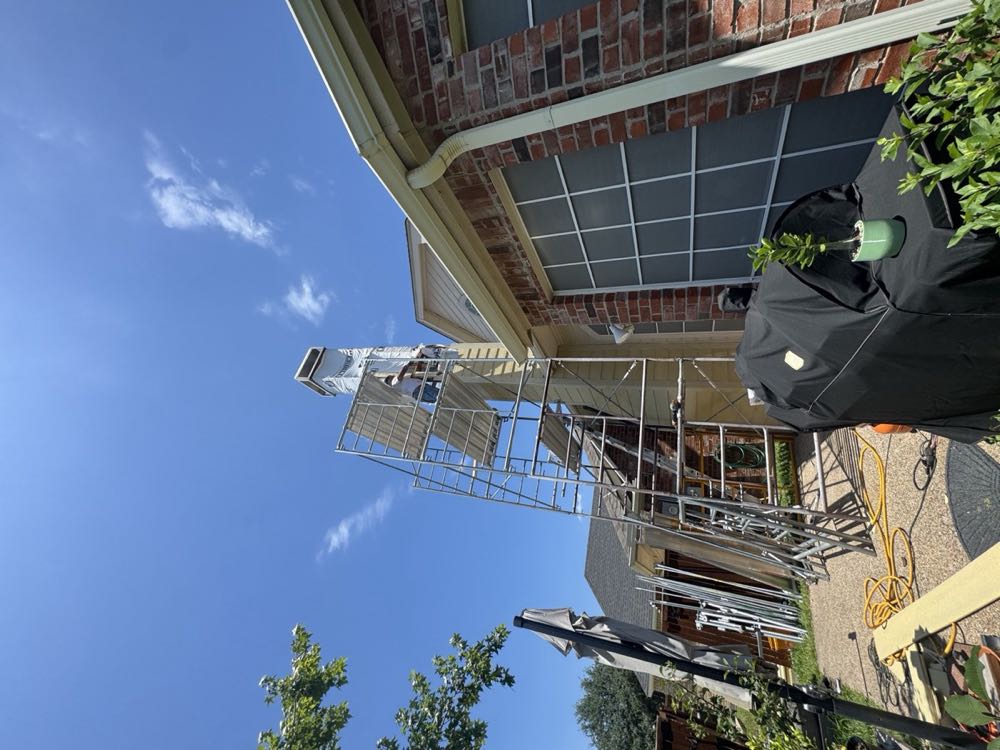
Signs your chimney masonry needs repair.
Flaking or popped brick faces
Pitted, peeling brick with a rough orange core exposed is active spalling — it accelerates once it starts.
Brick pieces on the ground
Chips and shards in the flower bed or gutters mean the chimney is shedding itself one freeze at a time.
White chalky staining
Efflorescence is water's calling card — minerals left behind as moisture moves through the masonry.
Stair-step cracking
Cracks climbing through brick and joints in a staircase pattern point to soil movement or structural stress.
A visible lean
Sight up the stack from the ground — any drift off plumb in a multi-ton brick column is urgent.
Damp interior walls
Stains or bubbling paint on walls near the chimney mean water is passing through the masonry into the house.
Diagnosed, matched, rebuilt to blend in.
Full Masonry Inspection
We map every spalled unit, failed joint and crack — and trace the water source feeding the damage — with photos you can see.
Brick & Mortar Matching
Replacement brick sourced by size, color and texture; mortar blended to match — so the repair vanishes into the wall.
Upfront Price
One clear, all-in number scoped to the actual damage, approved by you before we cut out a single brick.
Repair & Protect
Damaged units replaced, joints repointed, the water source corrected — finished with after photos before we leave.
Masonry repair, answered.
How much does chimney masonry repair cost in DFW?
Most chimney brick and masonry repairs in Dallas–Fort Worth run $400–$3,000 depending on scope — replacing a handful of spalled bricks sits at the low end, while rebuilding several courses on a tall stack with scaffolding sits at the top. You get an exact, all-in price after a $49 inspection, before any work begins.
What is spalling, and why is my brick flaking apart?
Spalling is when the face of a brick pops or flakes off. Brick absorbs water, and when a North Texas cold snap freezes that trapped moisture it expands about 9% — enough pressure to shear the face right off. Once the softer core is exposed, the brick deteriorates fast, which is why spalling should be repaired promptly and the water source fixed.
Can you match my existing brick?
Yes — matching is most of the craft. We source brick by size, color range and texture, blend replacement units across the repair area, and match the mortar color and joint profile, so the fix reads as original wall instead of a patch. For discontinued or historic brick, we can often pull matching units from a less visible face of the chimney.
Is the white powder on my chimney a problem?
That chalky white bloom is efflorescence — minerals left on the surface as water moves through the masonry and evaporates. The powder itself wipes off; what matters is what it's telling you: water is traveling through your brick. It's an early warning worth an inspection before the damage becomes spalling or interior leaks.
My chimney is leaning — can it be repaired?
Sometimes. A slight lean caused by failed joints in the upper courses can often be corrected by rebuilding from the roofline up. A lean originating at the base — common with DFW's expansive clay soil — is a foundation issue that repointing can't fix. We assess honestly, document with photos, and tell you plainly whether repair or rebuild is the right money.
Often paired with masonry repair.
Stop the spalling before it spreads.
Book a $49 inspection and get an exact, upfront price — with matched brick and before-and-after photos on every job.
(469) 980-1178One call keeps the fire where it belongs.