
Chimney Flashing Repair
The seam where your roof meets your chimney is the single most common leak point on the whole house. We rebuild it with layered step and reglet-cut counterflashing — metal that sheds water for decades, not tar that fails by next spring.
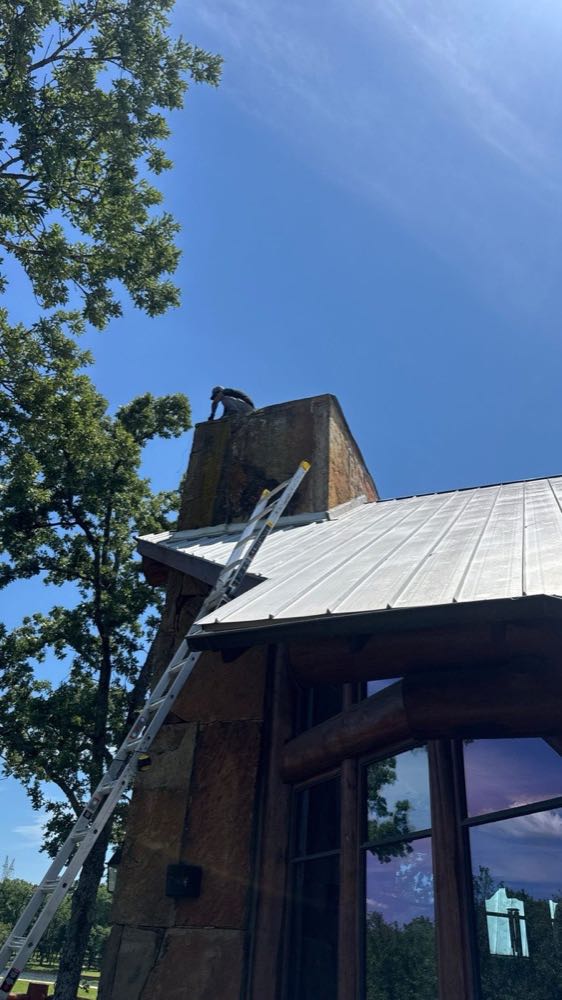
What is chimney flashing?
Flashing is the metal system that seals the joint where your chimney punches through the roof. It has to solve a genuinely hard problem: the roof and the chimney are two separate structures that expand, contract and settle independently — especially on DFW's expansive clay soil, which rocks the house through every wet–dry cycle. A rigid bead of sealant across that moving joint is doomed from day one. Real flashing solves it with two overlapping layers of metal that shed water while still letting each structure move.
Step flashing and counterflashing, explained
Step flashing is a run of L-shaped metal pieces, one woven into each shingle course along the chimney's sides, stair-stepping down the slope so water is carried onto the shingles below at every course. Counterflashing is the second layer: metal set into the chimney itself that laps down over the step flashing like a shingle of its own, so water sheeting down the brick can never sneak behind the first layer. Done right, counterflashing is reglet-cut — set into a groove ground into the mortar joints, folded in and sealed — rather than surface-glued to the brick, where the Texas sun peels adhesives loose in a few summers.
Why roof tar is a band-aid
Most of the flashing "repairs" we're called to redo are black smears of roofing tar over the old metal. Tar looks watertight the day it's troweled on, then bakes brittle, cracks at the joint's first seasonal move, and traps moisture against the metal it was supposed to protect — all while hiding the actual failure from view. Water is the villain in every masonry story, and at the roofline it doesn't just stain drywall: it soaks the chimney's brick from the side, feeding freeze–thaw spalling, and rots roof decking around the chimney's base. On wide chimneys, the fix often pairs new flashing with a chimney cricket — a small peaked diverter that splits water around the uphill face instead of letting it pond there.
The telltale everyone misses
A brown ceiling stain within a few feet of the fireplace — or a stripe of damp drywall along the chimney wall after a storm — is the classic flashing signature. Homeowners often re-shingle the whole slope chasing it; the leak was at the seam all along. We diagnose with rooftop photos, quote one upfront price, and rebuild the seam to shed water the way the original builder should have.
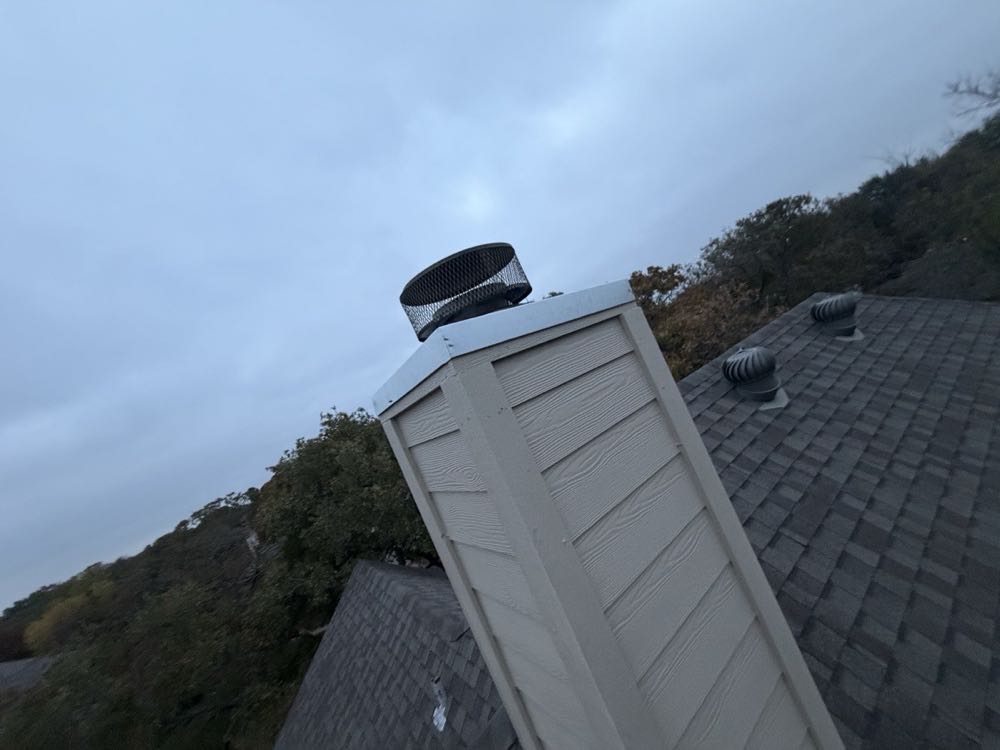
Signs your chimney flashing has failed.
Ceiling stains near the fireplace
Brown rings or damp drywall within a few feet of the chimney that grow after rain — the classic flashing telltale.
Tar smears at the seam
Black patch jobs around the chimney base mean someone band-aided a failure that's still there underneath.
Rusted or lifted metal
Flashing that's corroded, bent up or pulled away from the brick has already lost the seal.
Missing counterflashing
Step flashing with nothing lapped over it — or caulk standing in for metal — leaks as soon as the caulk ages.
Water in the attic
Damp insulation, dark decking or drip trails around the chimney penetration point straight at the seam.
Damage after a hail storm
DFW hail dents and displaces flashing — check the seam after every big storm, even if the shingles survived.
Diagnosed at the seam, sealed in metal.
Rooftop Leak Diagnosis
We inspect the flashing, crown, cap and brick together and show you photos, so you fix the actual source of the leak.
System Design
Step flashing, reglet-cut counterflashing and — where the roof needs it — a cricket, planned for your pitch and chimney width.
Upfront Price
One clear, all-in number approved by you before any metal is cut or a single shingle is lifted.
Layered Metal Install
Step flashing woven into the courses, counterflashing cut into the mortar, sealed and photographed before we leave.
Chimney flashing, answered.
How much does chimney flashing repair cost in DFW?
Most chimney flashing repairs in Dallas–Fort Worth run $400–$1,200, depending on chimney size, roof pitch and whether the counterflashing needs to be reglet-cut into the mortar joints. You get an exact, all-in price after a $49 inspection — before any work begins.
What's the difference between step flashing and counterflashing?
Step flashing is a series of L-shaped metal pieces woven into the shingle courses against the chimney, carrying water down the roof. Counterflashing is a second layer set into the chimney's mortar joints that laps down over the step flashing, so water running down the brick can never get behind the first layer. The two-layer system also lets roof and chimney move independently without breaking the seal.
Why is roof tar a bad fix for a flashing leak?
Tar is a band-aid: it bakes brittle in Texas sun, cracks within a season or two, and hides the failed metal underneath so the leak returns in the same spot — usually after the next spring storm. Proper repair replaces the flashing system itself, so the seam is sealed by overlapping metal, not a smear that needs re-doing every year.
How do I know it's the flashing and not the roof?
The classic telltale is a ceiling stain within a few feet of the fireplace or chimney wall that grows after heavy rain. Because the roof-to-chimney seam is the most common leak point on the whole roof, we inspect the flashing, crown, cap and brick together and show you photos, so you fix the actual source — not a guess.
How long does new flashing last?
Properly layered step and counterflashing in quality metal typically lasts 20–30 years — as long as the roof itself, which is why we recommend having it done right once rather than tarred annually. We finish with photos of the completed seam so you can see exactly what you paid for.
Often paired with flashing work.
Seal the seam before the next storm finds it.
Book a $49 inspection with rooftop photos and get an exact, upfront price on flashing done in metal, not tar.
(469) 980-1178One call keeps the fire where it belongs.