
Deep Creosote Removal
When creosote hardens into a shiny glaze, no brush on earth will move it. We chemically soften stage-3 buildup and remove it mechanically — before it fuels a chimney fire.
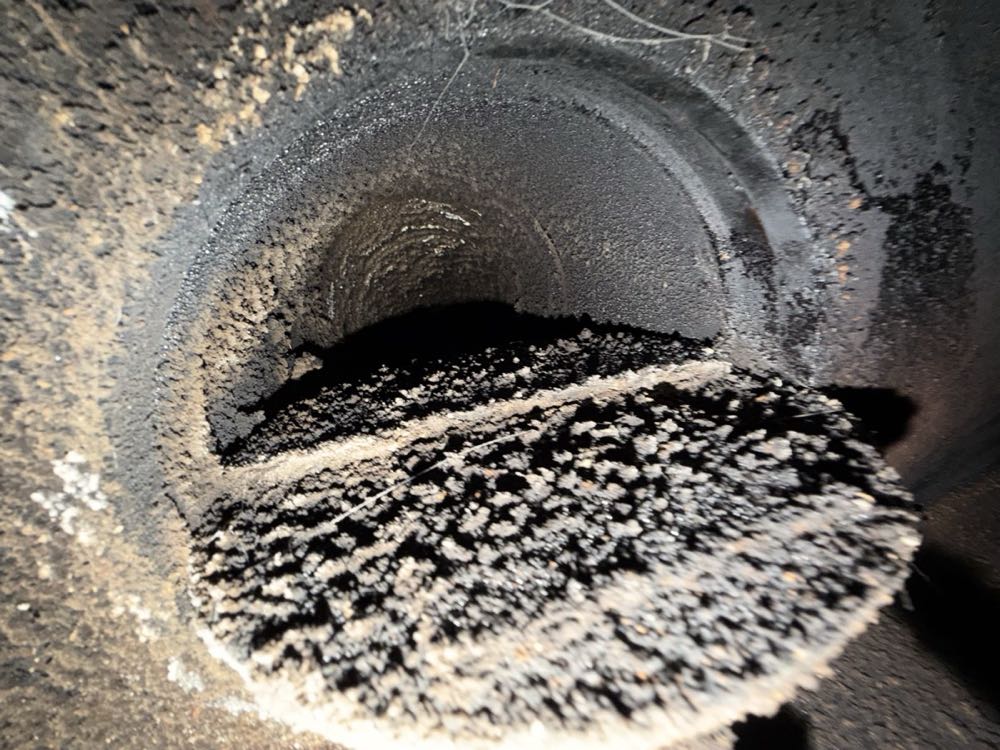
What is creosote — and why does stage 3 matter?
Creosote is the residue wood smoke leaves behind as it cools inside the flue. It builds in three stages, and each stage is harder to remove than the last. Stage 1 is a dusty, velvety soot — a standard sweep brushes it out easily. Stage 2 is flaky, crunchy tar, like burnt cornflakes clinging to the liner — a rotary whip still handles it. Stage 3 is the problem child: repeated slow, cool fires bake the earlier layers into a hard, shiny glaze that bonds to the flue tile like enamel on a bathtub.
That glaze is concentrated fuel. It ignites at roughly 2,000°F — a temperature a single hot fire or stray spark can deliver — and once it lights, the resulting chimney fire can crack flue tiles, open pathways to the framing around the chimney, and in the worst cases spread to the house itself. Many chimney fires go unnoticed by homeowners; the damage only turns up later on a camera inspection.
Why brushing can't fix it
A brush — even an aggressive rotary head — simply skates over glazed creosote. Scraping harder isn't the answer either: attacking the glaze with steel tools can gouge and crack the very liner you're trying to protect. Sweeps who "cleaned" a glazed flue with a brush left the fuel exactly where it was, just shinier.
How Texan Flue removes it
We treat the glaze with a catalytic chemical treatment (a PCR-style compound applied directly to the buildup) that breaks down the creosote's structure over days, turning rock-hard glaze brittle and loose. On the follow-up visit we mechanically remove the loosened material with rotary equipment under full HEPA dust containment, then run a camera down the flue so you can see bare liner — not our word for it, actual footage. If the fire that created the glaze also damaged the tiles, we'll show you that too and price relining options upfront.
Keeping it from coming back
Glaze is a symptom of how the fireplace burns: wet wood, smoldering overnight fires and closed-down dampers all keep smoke cool and lingering. After removal, we'll show you what caused yours — often a fix as simple as seasoned wood and hotter, shorter fires, backed by an annual sweep so buildup never gets past stage 1 again.
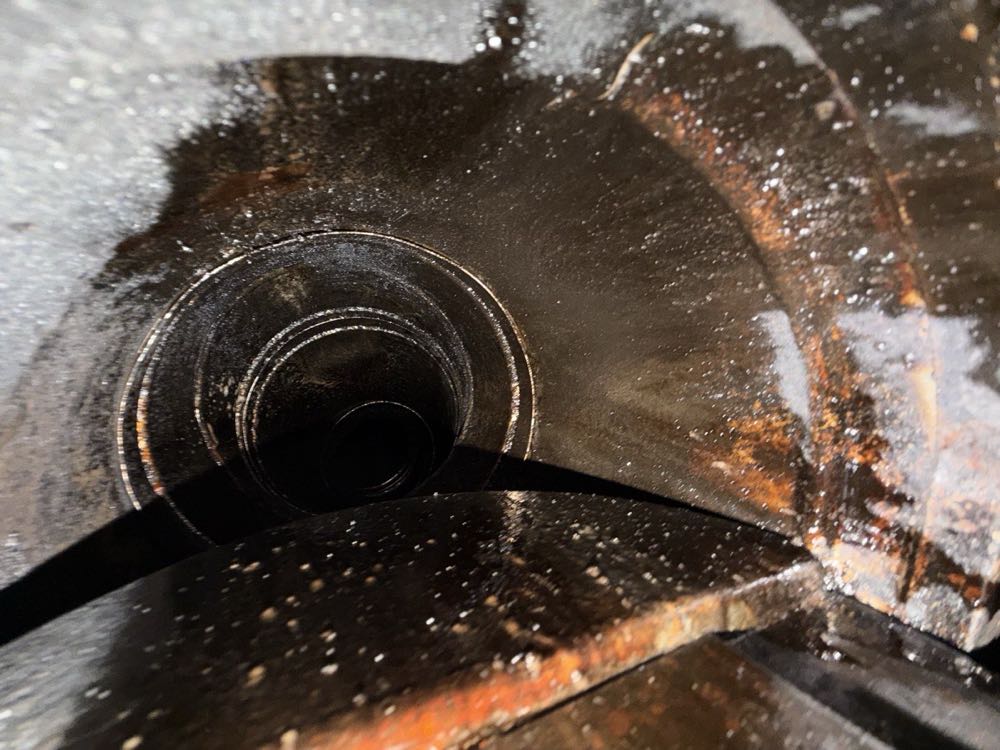
Signs of dangerous creosote buildup.
Shiny black glaze in the flue
Shine a light past the damper — a wet-looking, tar-like sheen is stage-3 creosote, not ordinary soot.
Tar dripping or oozing
In summer heat, glazed creosote can soften and run — black streaks on the smoke shelf are a red flag.
Strong asphalt-like odor
A sharp, tarry smell on humid DFW days points to heavy creosote saturating the flue.
A sweep said "it won't brush off"
If a cleaning left shiny deposits behind, the flue needs chemical treatment, not a second brushing.
Evidence of a chimney fire
Puffy, honeycombed creosote, roaring sounds or flames from the top mean a fire already happened — get it scanned.
Years of slow, smoky fires
Wet wood and smoldering overnight burns are the recipe for glaze. If that's your habit, assume buildup.
Softened, removed, verified on camera.
Camera Assessment
We scan the flue, show you the glaze on video, and grade the buildup so the price and plan are exact — before any work.
Chemical Treatment
A catalytic PCR-style compound is applied to the glaze, breaking down its structure until it turns brittle and releases from the liner.
Mechanical Removal
Rotary equipment strips the loosened creosote top to bottom under full HEPA dust containment.
Verify & Prevent
A final camera pass proves the liner is clean, and we walk you through the burn habits that keep it that way.
Creosote removal, answered.
How much does deep creosote removal cost in DFW?
Stage-3 glazed creosote removal typically runs $300–$800 in Dallas–Fort Worth, depending on how thick the glaze is and how much of the flue it covers. We show you camera footage of the buildup first, quote an exact all-in price, and only then start work.
Why can't glazed creosote just be brushed out?
Stage-3 creosote has baked into a hard, shiny glaze that bonds to the flue liner like enamel. A brush skates right over it. It has to be chemically softened with a catalytic treatment and then removed mechanically — and aggressive scraping without the treatment risks damaging the liner itself.
How dangerous is stage-3 creosote, really?
It's the most concentrated fuel in your house. Glazed creosote ignites at roughly 2,000°F — a temperature a single hot fire or stray spark can reach — and a chimney fire burns hot enough to crack flue tiles and expose the framing around the chimney. Most chimney fires we're called after started in a glazed flue.
How does creosote get to stage 3 in the first place?
Slow, cool-burning fires are the main cause — green or wet wood, overloaded fireboxes, closed-down dampers and oversized flues all keep smoke lingering in a cool chimney, where it condenses layer over layer. Each new fire bakes the previous layer harder.
How long does deep creosote removal take?
Plan on two visits in most cases: one to apply the chemical treatment and let it work on the glaze, and a second to mechanically remove the loosened creosote and scan the flue. Severe buildup can take an additional round — we set expectations before we start.
Often paired with creosote removal.
Get the fuel out of your flue.
Book a $49 inspection — we'll scan the flue, show you the footage and quote an exact price on the spot.
(469) 980-1178One call keeps the fire where it belongs.