Chimney Animal & Nest Removal
Scratching, chirping or a smell you can't place? We remove birds, squirrels and raccoons humanely, clear every scrap of nest, sanitize the flue — and cap it so it never happens again.
Why animals love your chimney
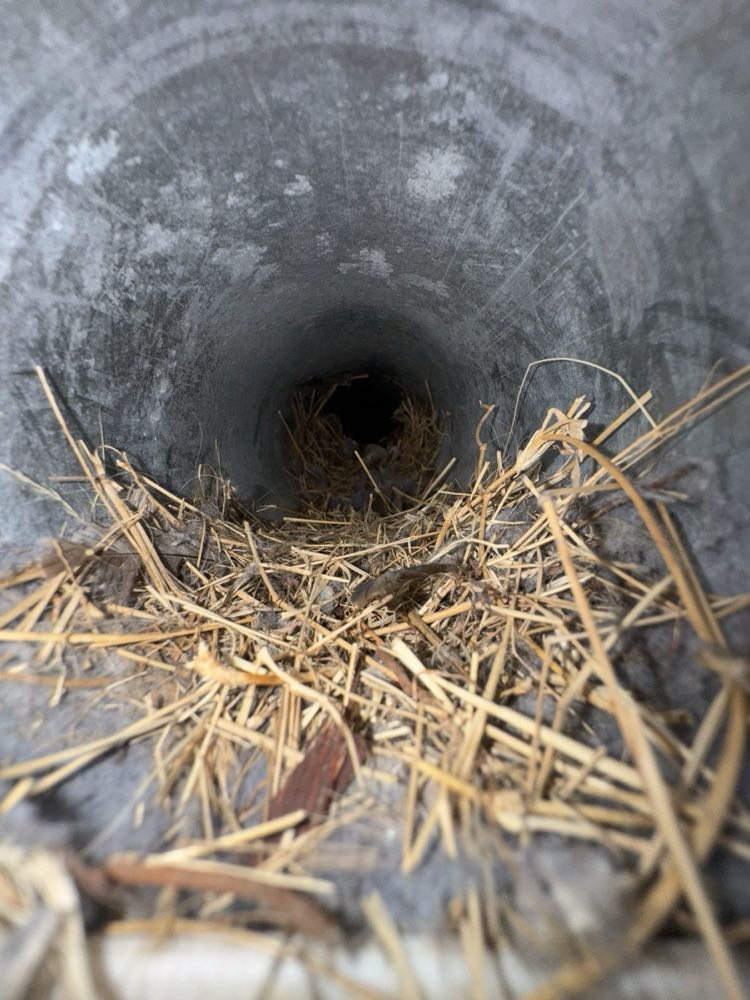
To wildlife, an uncapped flue is the best real estate on the block: a tall, dark, weatherproof hollow that looks exactly like the dead trees animals have nested in forever. In North Texas the usual tenants are chimney swifts, squirrels and raccoons — and each one creates a different problem. Swifts glue twig nests to the flue wall; squirrels haul in leaves and bedding by the armful; a mother raccoon will set up a den on your smoke shelf and defend it.
Whatever moved in, the result is the same: a blocked flue. Nesting material is bone-dry tinder sitting in the path of sparks and hot gases — a leading cause of flue blockages that send smoke, and sometimes fire, back into the house. A blocked chimney can also push carbon monoxide indoors if a gas appliance vents through it.
Chimney swifts — protected, and on their own schedule
That fluttering, chattering sound in late spring is almost always chimney swifts, and here's what many homeowners don't know: swifts are protected by the federal Migratory Bird Treaty Act. An active nest with eggs or young legally cannot be disturbed — by us or anyone else — until the birds fledge, usually within a few weeks. We confirm what you're hearing, seal the fireplace opening so nothing ends up in your living room, and return to remove the empty nest and cap the flue the moment the birds are gone. Timing matters; doing it right protects you from fines and the birds from harm.
Humane removal, full cleanup
Squirrels and raccoons are removed alive whenever possible — extracted, encouraged out or released through one-way doors that let them leave and never return. We never seal an animal inside a flue; it's cruel, and a carcass in a chimney becomes an odor and fly problem you will not forget. Then comes the part cut-rate services skip: every scrap of nest, droppings and debris comes out, and the flue is sanitized. Accumulated bird and bat droppings can harbor the fungus behind histoplasmosis, a respiratory infection — a health reason, not just a comfort reason, to finish the job properly. We photograph the flue before and after so you see it's truly clear.
Prevention is a one-time fix
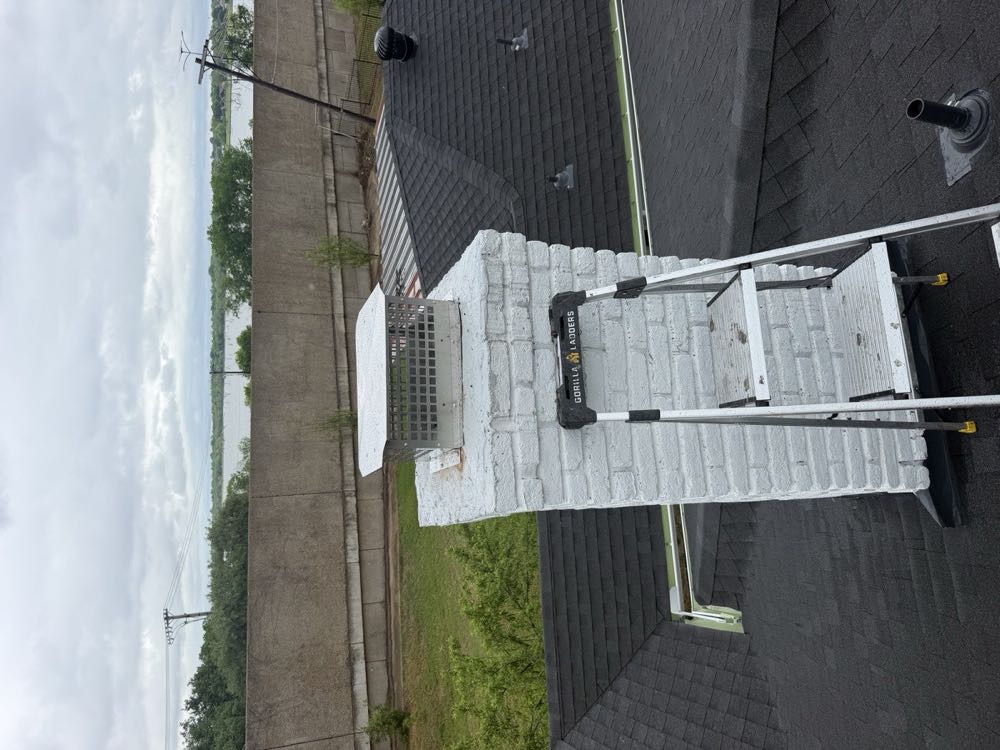
Nearly every animal call we run traces back to a missing or storm-damaged cap. A stainless mesh cap — or a spark arrestor on the right setup — closes the door permanently, usually for less than the cost of a second removal.
Signs something is living in your chimney.
Scratching or scurrying
Claws on flue tile — usually a squirrel or raccoon — is loudest at dawn and dusk.
Chirping that won't stop
A rhythmic, mechanical chatter in late spring is a chimney swift nest — federally protected, so call before acting.
Twigs or debris in the firebox
Nesting material falling past the damper means construction is underway above it.
Sudden foul odor
Droppings, urine or a deceased animal in the flue announce themselves fast in Texas heat.
Flies around the fireplace
A cluster of flies at the hearth is a classic sign of an animal that didn't make it out.
Smoke backing into the room
A fire that suddenly drafts poorly may be pushing against a nest blocking the flue — stop burning immediately.
Out humanely, cleaned fully, capped for good.
Identify the Tenant
We inspect the flue with a light and camera, confirm the species, and check whether a protected nest changes the timeline.
Humane Removal
Animals come out alive wherever possible — extraction, encouragement or one-way doors — never sealed inside.
Clear & Sanitize
All nesting material, droppings and debris are removed under HEPA containment and the flue is deodorized and sanitized.
Cap It Shut
A stainless mesh cap is fitted the same visit, with photos of the cleared flue and the finished install.
Animals in chimneys, answered.
How much does chimney animal removal cost in DFW?
Most animal and nest removals in Dallas–Fort Worth run $200–$500, depending on the animal, how deep the blockage sits and how much nesting material has to come out. We quote an exact all-in price after looking at the flue — and we'll recommend a cap so you never pay for this twice.
There's chirping in my chimney — can you just remove the birds?
If they're chimney swifts — and in North Texas they usually are — not immediately. Swifts are protected under the federal Migratory Bird Treaty Act, so active nests with eggs or young can't be disturbed until the birds fledge, typically within a few weeks. We confirm the species, secure the fireplace so nothing enters the house, and schedule nest removal and capping the moment it's legal.
Is the animal removed humanely?
Yes. We remove animals alive whenever possible — raccoons and squirrels are encouraged out or extracted and released, and one-way doors let stragglers leave without getting back in. Sealing an animal inside a flue is both inhumane and a guarantee of odor problems, so we never simply cap over one.
Why does my fireplace smell after the animal is gone?
Droppings, urine and leftover nesting material keep releasing odor into the flue, and bird and bat droppings can harbor the fungus that causes histoplasmosis, a respiratory infection. That's why removal alone isn't enough — we sweep out all nesting debris and sanitize the flue before the job is done.
How do I keep animals out of the chimney for good?
A stainless steel chimney cap with mesh siding is the permanent fix — it blocks birds, squirrels and raccoons while letting the flue breathe. Nearly every animal call we run is on an uncapped or damaged-cap chimney, so we can install one the same visit.
Often paired with animal removal.
Evict them today. Keep them out for good.
Book a $49 inspection — we'll identify what's up there, quote an exact price and cap it so it never comes back.
(469) 980-1178One call keeps the fire where it belongs.