
Spark Arrestor Installation
Stainless mesh screening fabricated and fitted to your flue — hot embers burn out at the top of the chimney instead of landing on your roof or a bone-dry August lawn, and your draft never notices the difference.
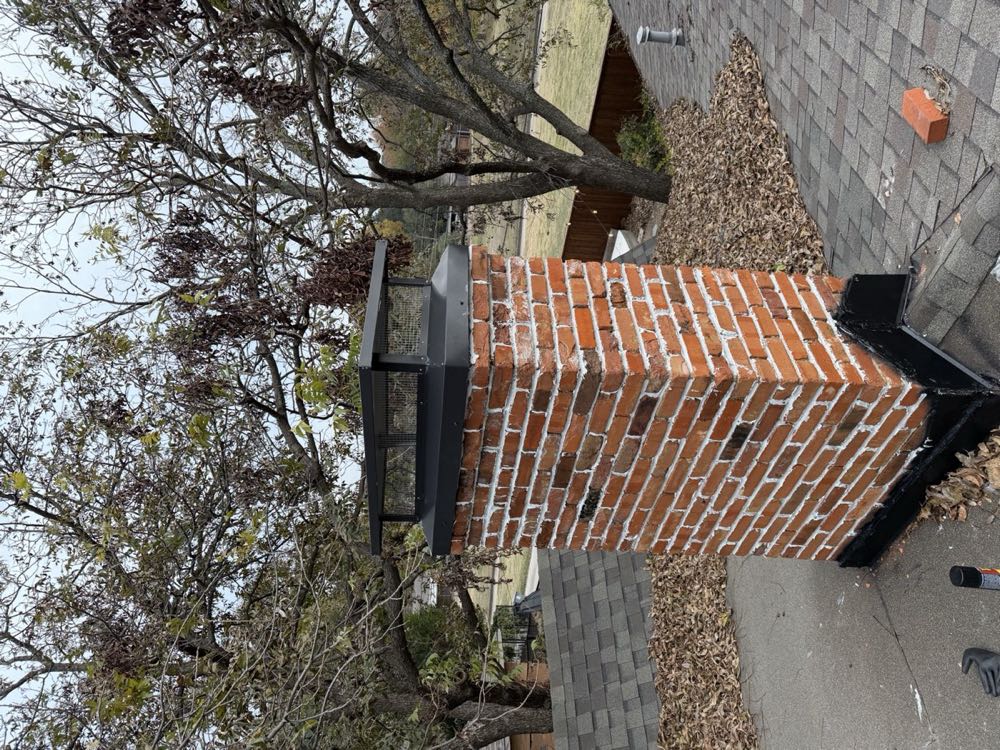
What is a spark arrestor?
Every wood fire sends more than smoke up the flue. Bits of burning paper, glowing creosote flakes and live embers ride the hot draft toward the top of the chimney — and if nothing stops them, they exit into the wind still burning. A spark arrestor is the stainless mesh screen that stops them: fitted around the flue outlet, usually as the sides of the chimney cap, it lets smoke stream through while embers strike the mesh, shatter and burn out harmlessly. It is a simple piece of metal, and it is the single cheapest piece of fire protection a wood-burning home can own.
Why it matters more in North Texas
Think about where those embers land here. By late summer a DFW lawn is straw; cedar fences, mulch beds and composition-shingle roofs surround nearly every chimney; and when a dry cold front finally makes it fireplace weather, it usually arrives with wind. An ember that would fizzle on wet grass elsewhere finds ready fuel in a Texas backyard. Many area municipalities and HOAs require arresting mesh on wood-burning flues for exactly this reason, and insurers increasingly ask about it — a detail worth having in order before a claim, not after. The mesh earns a second paycheck too: it blocks birds, squirrels, raccoons and bats from turning your flue into a den, which is why an arrestor is often installed the same day as an animal removal.
Mesh sizing: the part most installers get wrong
A spark arrestor only works if it's sized correctly, and this is where cheap installs go sideways. Mesh that's too fine clogs with soot in a season and starts choking the draft — smoke backs into the room, the fire smolders, and homeowners blame the fireplace. Mesh that's too coarse waves embers right through. The standard for wood-burning flues is roughly 5/8-inch openings with generous total screen area, so airflow stays strong even as normal soot builds between sweeps. Because Texan Flue fabricates its own caps and screens in our own metal shop, we build the arrestor to your flue's exact dimensions — oversized flues, multi-flue chimneys and custom caps included — instead of forcing a stock screen to fit and hoping the draft survives.
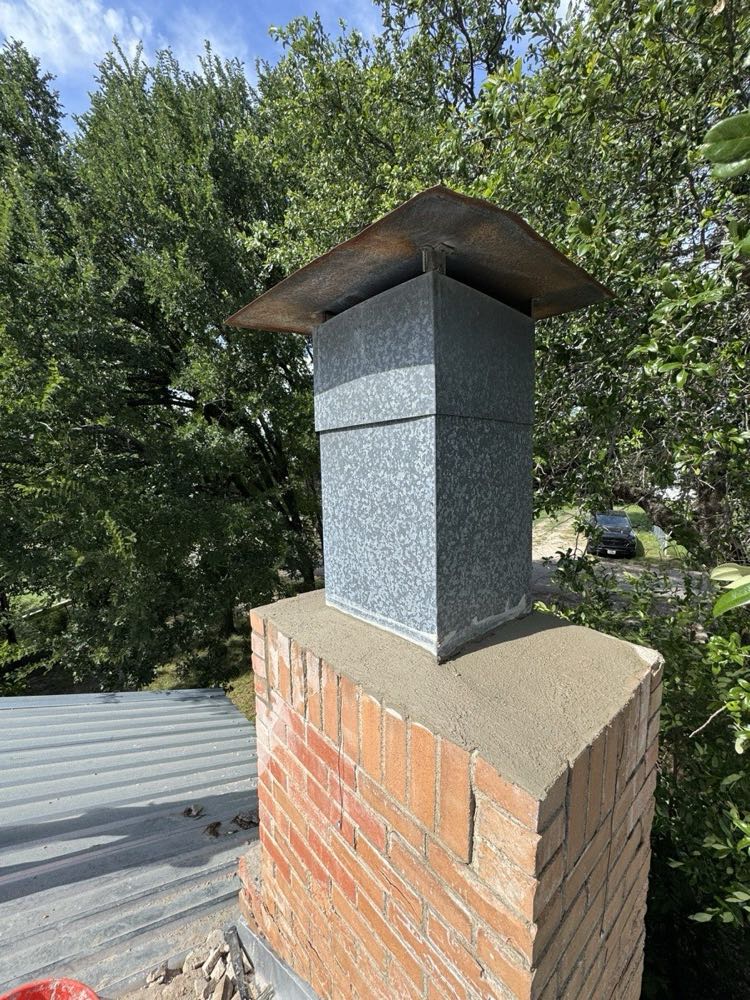
Signs you need a spark arrestor — or a new one.
No mesh on your cap
Look up: if your cap is just a lid on legs with open sides, embers have a clear runway to the roof.
Sparks visible above the chimney
Fireflies over the flue on a burning night mean live embers are escaping — the arrestor is missing or failed.
Burn spots on the roof or yard
Small scorch marks on shingles, the deck or the lawn are embers that made it out and almost mattered.
Torn, rusted or sagging mesh
Corroded screen fails exactly where embers hit it hardest — and opens a door for animals at the same time.
Animal noises in the flue
Scratching or chirping means the screen is breached or missing — nesting material is itself a fire hazard.
Smoke backing into the room
Mesh that's too fine or caked shut chokes the draft. The fix is correctly sized screen, not a bigger fire.
Measured, sized, screened — done right.
$49 Inspection
We check your cap, existing screen and flue condition, and confirm what your city or HOA requires for arresting mesh.
Size the Mesh
Flue dimensions and burn habits determine mesh gauge and screen area — enough to stop embers without starving the draft.
Fabricate to Fit
Standard flues get quality stainless screen; odd sizes and multi-flue chimneys get an arrestor built in our own shop.
Install & Verify
Mounted, sealed and draft-checked — with photos of the finished screen before we come off the roof.
Spark arrestors, answered.
How much does spark arrestor installation cost in DFW?
Most spark arrestor installations in Dallas–Fort Worth run $150–$400 installed, depending on flue size and whether we're adding mesh to an existing cap or fabricating a full arrestor assembly. You get an exact, all-in price after a $49 inspection — before any work begins.
What exactly does a spark arrestor do?
It's a stainless mesh screen fitted around the flue outlet, usually as part of the chimney cap. Hot embers riding the draft up the flue hit the mesh, break apart and burn out before they can land on your roof, your fence line or a neighbor's yard. Smoke passes through freely; sparks don't.
Is a spark arrestor required by code?
Many North Texas municipalities and HOAs require spark arresting mesh on wood-burning flues, and some insurers ask about one when writing or renewing a homeowner policy. Even where it isn't mandated, it's the cheapest fire protection a wood-burning home can buy — we'll confirm what your city calls for during the inspection.
Will the mesh choke my chimney's draft?
Not if it's sized right. Mesh that's too fine clogs with soot and stalls the draft; too coarse lets embers through. We fit code-standard mesh — typically 5/8-inch openings for wood-burning flues — with enough total screen area that airflow stays strong even as normal soot accumulates between sweeps.
Does a spark arrestor keep animals out too?
Yes — the same mesh that traps embers blocks birds, squirrels, raccoons and bats from getting into the flue. If you've already got animals in the chimney, we handle humane removal first, then screen the flue so they don't come back.
Often paired with a spark arrestor.
Screen it before burn season.
Book a $49 inspection and get an exact, upfront price — most arrestors install in a single visit.
(469) 980-1178One call keeps the fire where it belongs.