
A chimney leak is never just a nuisance. Water is a chimney's single worst enemy, and every rainstorm that finds its way inside is quietly dismantling masonry, rusting steel, and rotting the framing hidden behind your walls. If you're seeing stains on the ceiling, a musty smell after a storm, or drips inside the firebox, the clock is already running.
Here in Dallas–Fort Worth, spring storms, punishing hail, and wind-driven rain expose chimney weaknesses faster than almost anywhere in the country. The good news: nearly every rain leak traces back to a handful of well-understood causes, and each has a proven fix. Below, we walk through the usual culprits, how a professional pinpoints the real source, and why acting now protects both your home and your wallet.
The crown is the sloped concrete or mortar slab at the very top of your chimney, designed to shed water away from the flue and brick. Years of Texas sun and freeze-thaw cycles cause it to crack, and once it does, rain pours straight down into the masonry below.
Tell-tale sign: hairline or spidering cracks visible on top, or stains creeping down the exterior brick just beneath the crown. The fix: professional chimney crown repair — sealing fine cracks or rebuilding the crown entirely so it once again sheds water the way it was meant to.
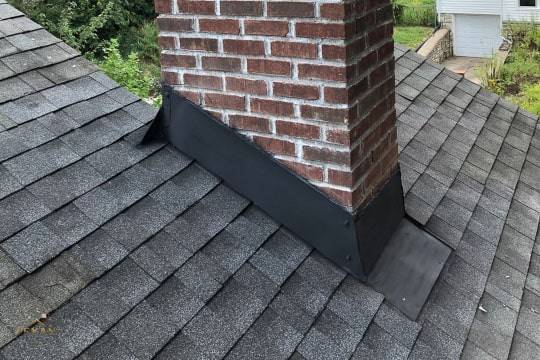
Flashing is the layered metal seal where the chimney meets the roofline — statistically one of the most common leak points on any home. When flashing lifts, corrodes, or was never sealed correctly, wind-driven rain slips underneath and travels into the attic and ceilings.
Tell-tale sign: water stains on the ceiling around the chimney chase, often several feet from the chimney itself. The fix: expert chimney flashing repair or replacement, properly stepped, sealed, and counter-flashed to lock water out for good.
Prefabricated chimneys are topped by a chase cover — a metal lid that keeps rain out of the chase. Builders often use thin galvanized steel that rusts within a few years, and rust holes let water pool and pour straight in. A poorly sized cover does the same.
Tell-tale sign: rust streaks running down the siding or chase, or standing water and orange staining on top. The fix: a custom chase cover fabrication in stainless steel or copper, built to fit precisely and sloped to drain — a permanent upgrade over the builder-grade original.
The chimney cap sits over the flue opening. Without one — or with one knocked loose by a storm — rain falls directly down the flue, soaking the smoke chamber, damper, and firebox from the inside. A cap also keeps out animals and stray embers.
Tell-tale sign: dripping or moisture inside the firebox, a rusted damper that sticks, or a damp, sooty odor after rain. The fix: professional chimney cap installation sized correctly to your flue and secured to withstand DFW wind gusts.
Brick and mortar look solid, but they're surprisingly absorbent. Over time — and especially after hail chips the masonry surface — they soak up rain like a sponge, wicking moisture deep into the structure where it freezes, expands, and spalls the brick face.
Tell-tale sign: flaking or crumbling brick faces, white chalky residue (efflorescence), and damp interior walls with no obvious crown or flashing failure. The fix: breathable chimney waterproofing that repels rain while still letting trapped vapor escape — never a common paint-on sealer that traps moisture inside.
Not every "leak" is rain from outside. When warm interior air meets a cold, oversized, or unlined flue, moisture condenses on the inner walls and trickles down — often mistaken for a roof leak. It's common in gas-converted fireplaces and improperly sized liners.
Tell-tale sign: persistent dampness inside the flue even when it hasn't rained, sometimes with a sharp acidic or sooty smell. The fix: a proper diagnosis of the flue and liner sizing so the true cause — not just the symptom — is corrected.
Water is deceptive. It can enter at the crown and surface as a stain ten feet away, which is why guessing leads to repeated, costly repairs. A thorough chimney inspection uses a high-resolution camera to travel the interior of the flue, along with a close exterior evaluation of the crown, flashing, cover, cap, and masonry. We trace water to its actual point of entry and show you exactly what we find — so the fix is precise the first time.
Why acting fast saves money: a small crown crack or a $200 flashing repair, left alone, becomes rotted framing, ruined drywall, a rusted firebox, and eventually a full chimney rebuild. In DFW's storm cycle, damage compounds with every season. Addressing a leak early is almost always a fraction of the cost of the destruction it prevents.
It depends entirely on the source — a chimney cap or minor flashing repair sits at the affordable end, while crown rebuilds or full waterproofing cost more. Because leaks are so often misdiagnosed, the honest answer starts with a proper inspection. Texan Flue offers a free estimate so you'll know the exact scope before committing. Call (469) 771-7000.
We don't recommend it. Common hardware-store sealers trap moisture inside the masonry and can accelerate spalling, and DIY patches rarely address the real entry point. Professional-grade breathable waterproofing and correct diagnosis matter. We're happy to assess it at no charge — request a free estimate at (469) 771-7000.
Yes. Hail chips masonry surfaces, dents and punctures chase covers and caps, and lifts flashing — all of which open new paths for rain. After a major storm is one of the smartest times to have your chimney checked. Texan Flue provides a free estimate on any storm-related repair. Call (469) 771-7000.
Very possibly. Water frequently travels along framing before it surfaces, so a stain feet away from the chimney often still originates at the flashing or crown. A camera inspection traces it precisely. There's no cost to have us take a look — ask for a free estimate at (469) 771-7000.
We treat active leaks as a priority, because every storm makes the damage worse. Reach out and we'll get you scheduled promptly, beginning with a free estimate so you understand the problem and the cost with no surprises. Call (469) 771-7000.
Don't let the next DFW storm turn a small leak into a major repair — call Texan Flue at (469) 771-7000 for your free estimate, where chimneys meet luxury.
Treat it that way — book a free camera inspection and see exactly what's going on inside.
Get a Free Estimate