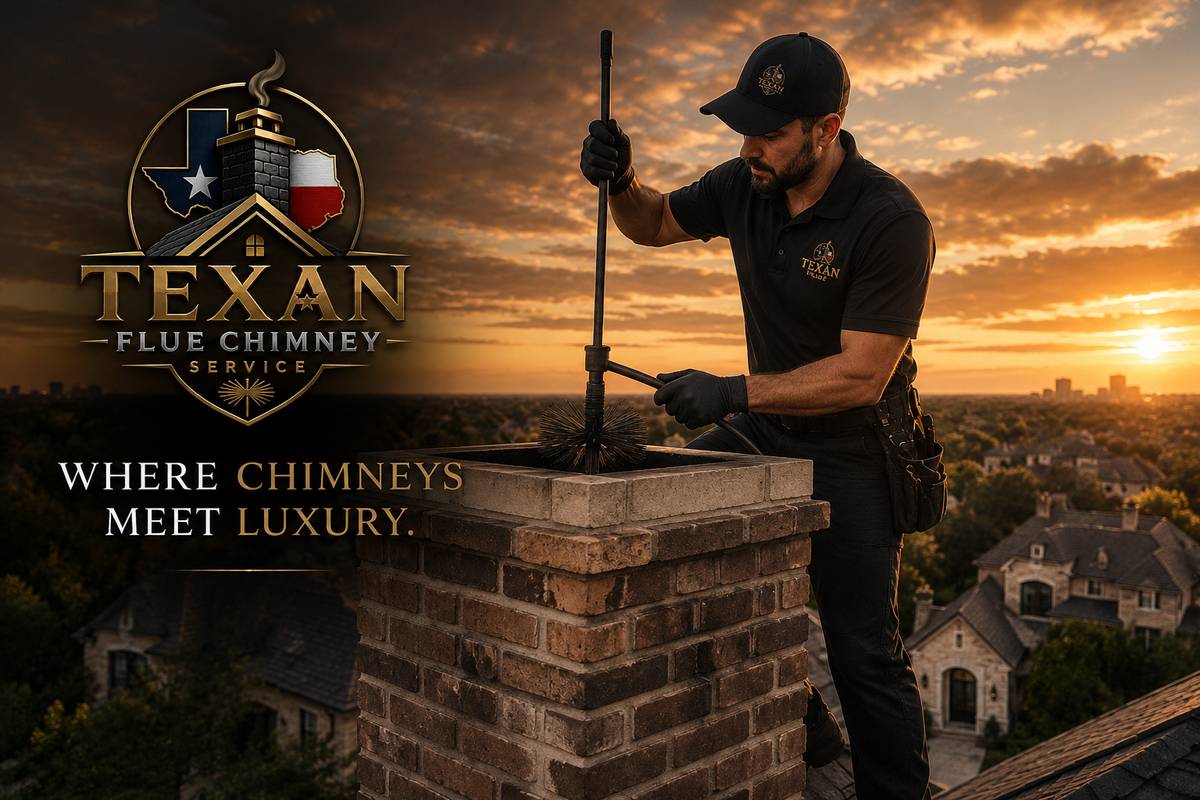
Your chimney is the crown jewel of your home — a quiet monument rising above the Dallas–Fort Worth skyline. Yet it is also the most overlooked feature under your roof. The question we hear most often is deceptively simple: how often should you actually have your chimney swept and inspected? The answer is more nuanced than a calendar reminder, and getting it right protects both your home and your peace of mind.
Let us begin with the authority. The National Fire Protection Association (NFPA 211) states that chimneys, fireplaces, and vents shall be inspected at least once per year. The Chimney Safety Institute of America (CSIA) echoes this: every chimney deserves an annual inspection, regardless of how often you light a fire. Sweeping, however, follows a different trigger. The industry standard calls for a sweep once creosote accumulates to one-eighth of an inch (1/8") along the flue walls. At that thickness, creosote becomes a genuine fire hazard — and only a trained eye can measure it accurately.
In short: inspection is scheduled, sweeping is earned. An annual inspection tells you precisely when a professional chimney sweep is warranted, so you never guess and never overpay.
No two households burn alike, and frequency should reflect reality. A home that enjoys a handful of ceremonial fires over the holidays accumulates creosote slowly. A family that burns nightly through a North Texas cold snap builds it far faster — sometimes requiring a mid-season sweep. As a general guide:
What you burn is as important as how often. Unseasoned, wet, or freshly cut wood smolders at lower temperatures and releases far more moisture and unburned particles — the raw ingredients of creosote. Softwoods such as pine, with their high resin content, coat a flue quickly even when dry. Well-seasoned hardwoods — oak, pecan, hickory — burn hotter and cleaner, slowing buildup considerably. If you have been burning green or softwood this past season, assume your flue needs attention sooner and budget for creosote removal.
Here is where many homeowners are mistaken. "It's gas — it burns clean, so it never needs service." Not so. While gas produces little creosote, gas appliances still require an annual inspection. Venting can corrode, deteriorate, or become blocked; byproducts of combustion include water vapor and, when something is amiss, dangerous carbon monoxide. A compromised flue is a silent hazard. Our gas fireplace service confirms your logs, venting, and connections are safe and performing exactly as designed.
Dallas–Fort Worth presents a challenge all its own. Countless area homes — especially those built in the last few decades — feature prefabricated, factory-built fireplaces that owners light only a handful of times, if ever. Low usage lulls owners into neglect, yet these units still deteriorate: firebox panels crack, metal components rust, and chase covers fail long before the fireplace wears out from use. Add our notorious Texas summer humidity to even a light coating of creosote, and the result is that unmistakable acrid odor drifting into the living room on a hot July afternoon. If your home smells of last winter's fires, humidity and creosote are the culprits — and a sweep is the cure.
These two services are often confused, but they serve distinct purposes. An inspection is a diagnostic evaluation — a trained technician, ideally with a camera, examines the flue, firebox, damper, cap, crown, and structure for creosote, blockages, cracks, water intrusion, and wear. A sweep is the physical cleaning that removes creosote and debris from the flue. You may need a sweep every year, every few years, or twice in one hard winter — but the inspection is what tells you which. One informs; the other cleans.
This is the point most homeowners miss. Chimneys deteriorate whether or not you use them. Time, weather, and wildlife do their work regardless of your fireplace habits. An annual inspection routinely uncovers issues that have nothing to do with burning:
Usage does not reveal these problems — inspection does. Waiting until you smell smoke or hear scratching means the damage is already done.
Your chimney speaks; the wise homeowner listens. Schedule service promptly if you notice any of the following:
Timing is everything, and right now is ideal. The smartest homeowners schedule their chimney service in late summer and early fall — precisely this moment, in July — rather than waiting for the first cold snap. Once temperatures drop across DFW, every chimney company is booked solid for weeks, and you may be left waiting through the very season you most want a fire. Service now and you enjoy shorter waits, unhurried scheduling, and a chimney that is inspected, swept, and ready the instant you crave that first autumn blaze.
Do not wait for the rush — or for a problem — to remind you. Schedule now, in the quiet of summer, and step into fall with complete confidence. Book your $49 camera inspection today, or call us directly at (469) 771-7000. At Texan Flue, we tend to your chimney with the discretion, precision, and refinement it deserves, because this is where chimneys meet luxury.
Treat it that way — book a $49 camera inspection and see exactly what's going on inside.
Book a $49 Inspection