Your chimney liner is the quiet workhorse of your fireplace system, and when it fails, the consequences are anything but quiet. A cracked or corroded liner can allow intense heat, smoke, and colorless carbon monoxide to reach the combustible framing hidden behind your walls, turning a beautiful hearth into a genuine hazard. At Texan Flue, we believe safety and craftsmanship should never be an afterthought, which is why relining is one of the most important investments a Dallas-Fort Worth homeowner can make. This guide walks you through why liners matter, how the main liner types compare, when relining becomes non-negotiable, and what you can realistically expect to pay across the DFW metroplex.
The liner is the interior passage that carries smoke, heat, and combustion gases safely out of your home. It performs three critical jobs: it protects surrounding masonry and wood framing from intense heat, it shields brick and mortar from corrosive acidic byproducts, and it provides a correctly sized flue so your fireplace or appliance vents efficiently.
When a liner deteriorates, every one of those protections weakens at once. Heat can transfer to nearby framing and, over time, raise the risk of a house fire. Even more insidious is carbon monoxide, an odorless, invisible gas that a compromised flue can allow to seep back into living spaces. A sound liner is not a luxury add-on. It is the primary safety barrier between the fire in your firebox and the family in your home.
Most older DFW homes were built with clay tile liners, and clay served its era well. But North Texas is hard on masonry. Our dramatic freeze-thaw swings, sudden temperature drops, and the occasional chimney fire cause clay tiles to crack, spall, and shift. Because these tiles sit deep inside the flue, the damage is almost always invisible from the ground.
Once a tile cracks, gaps allow heat and gases to escape the intended path. Acidic condensation then attacks the mortar joints between tiles, accelerating decay. What begins as a hairline crack can progress into a flue that no longer contains combustion safely. This is precisely why a professional chimney inspection with camera scanning is the only reliable way to know your liner's true condition, and why relining is so common in established DFW neighborhoods.
Choosing the right liner is where craftsmanship meets engineering. Each option carries distinct advantages, and the best choice depends on your chimney's condition, your fuel type, and how you use your fireplace.
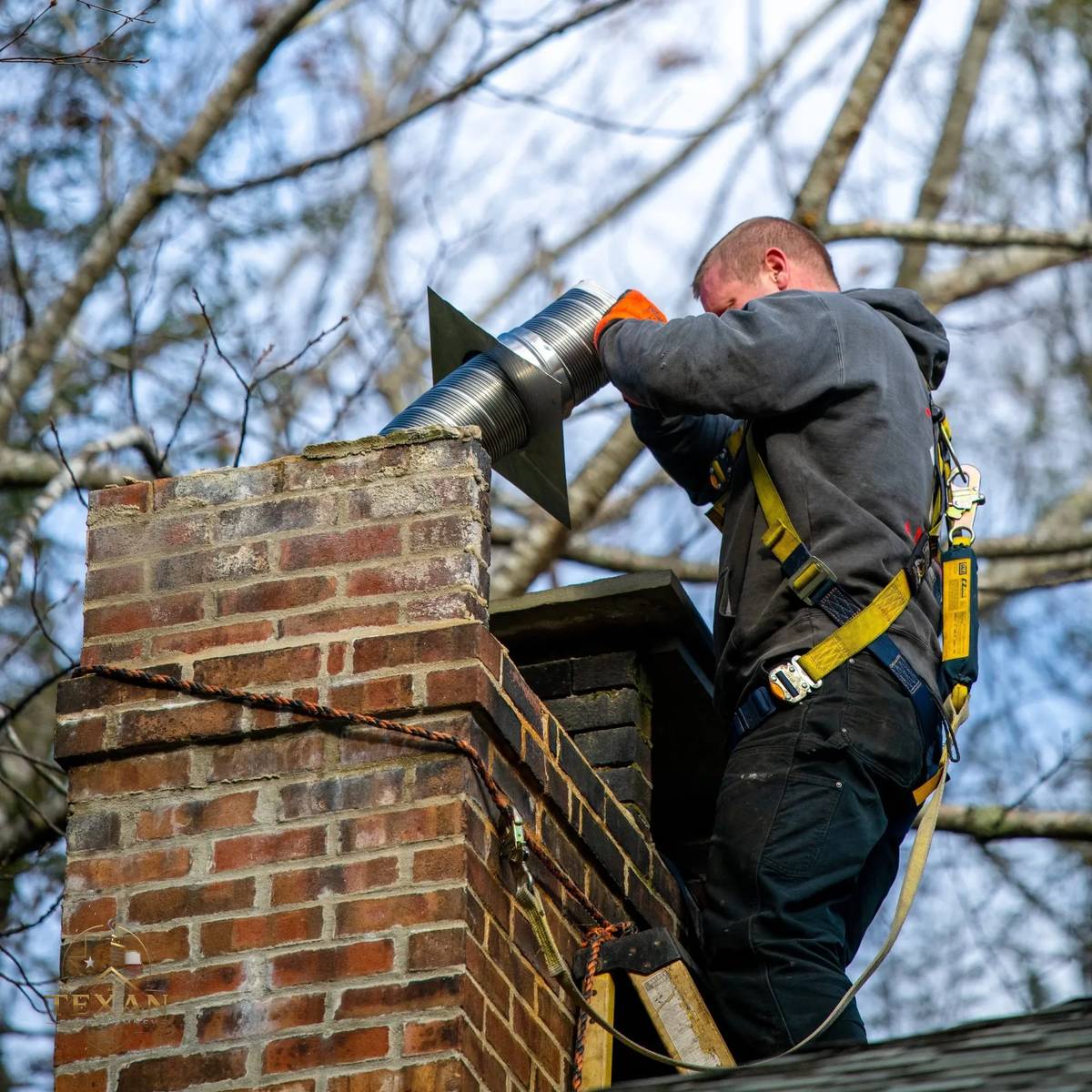
Stainless steel liners are the modern standard for relining. Durable, corrosion-resistant, and compatible with wood, gas, and oil appliances, a quality stainless liner is often backed by a lifetime warranty. It installs inside the existing flue and delivers excellent performance, making it our most frequently recommended solution.
Cast-in-place liners create a seamless, insulated masonry passage by casting a specialized material inside the existing chimney. This option can actually strengthen a deteriorating structure and offers superb insulation, though it is a more involved, higher-investment process.
Clay tile liners remain a traditional choice for new masonry construction and can be cost-effective up front. However, they are labor-intensive to install as a retrofit and share the same long-term vulnerability to cracking that prompts most relining projects in the first place.
Relining is not always optional. Several situations make it a firm safety and code requirement rather than a recommendation.
Pricing depends on liner type, chimney height, flue accessibility, insulation needs, and the extent of any existing damage. The figures below reflect realistic ranges we see across Dallas, Fort Worth, and the surrounding suburbs. They are planning estimates only, and your exact price comes from an on-site evaluation.
Because every chimney is different, the only way to know your true cost is a professional assessment. Texan Flue provides a free, no-pressure estimate so you can plan with confidence.
A relining done to luxury standards is far more than dropping a pipe down the flue. Our process begins with a thorough flue repair and relining evaluation, including a camera scan to document the exact condition of your chimney. From there, we clean the flue completely, address any masonry or crown issues that would undermine the new liner, and install a properly sized, insulated liner secured for lasting performance.
Attention to detail at every step is what separates a liner that simply passes inspection from one that performs beautifully and safely for decades. That commitment to doing it right the first time is the heart of what we mean by Where Chimneys Meet Luxury.
A new liner is a significant investment, and a little routine care keeps it performing at its best. Annual maintenance prevents creosote buildup, catches minor issues before they escalate, and preserves your warranty coverage. Scheduling a regular chimney sweep alongside a yearly inspection is the simplest way to protect both your liner and your family.
Well-maintained chimneys are safer, vent more efficiently, and hold their value, an important consideration in the discerning DFW real estate market. Think of ongoing care as the natural extension of the craftsmanship you invested in when you relined.
Most stainless steel relining projects in DFW run roughly $2,500 to $5,000, while cast-in-place and clay retrofits can range higher depending on chimney height, damage, and insulation needs. These are planning estimates only. Contact Texan Flue for a free estimate tailored to your exact chimney.
Warning signs include cracked clay tiles, white staining, a strong smoky odor, debris in the firebox, or a failed inspection. A camera-based chimney inspection is the only reliable confirmation. Texan Flue offers a free estimate that includes a clear assessment of your flue's condition.
Stainless steel is the modern standard for most homes, offering durability and often a lifetime warranty, typically $2,500 to $5,000. Cast-in-place suits deteriorating masonry that needs structural reinforcement and generally costs more. We'll recommend the best fit and provide a free estimate for your home.
Usually yes. Gas exhaust is moisture-heavy and can corrode an unlined or oversized flue, so a correctly sized liner is typically required for safe venting. Costs vary with your setup. Reach out to Texan Flue for a free estimate on your gas conversion and liner.
A quality stainless steel liner, properly installed and maintained, can last decades and is often backed by a lifetime warranty. Annual sweeps and inspections maximize its lifespan. Texan Flue provides a free estimate and can outline the right liner and care plan for your chimney.
Protect your home and enjoy your fireplace with total peace of mind. Call Texan Flue at (469) 771-7000 to Get a Free Estimate on your chimney liner or relining project today.
Treat it that way — book a free camera inspection and see exactly what's going on inside.
Get a Free Estimate