
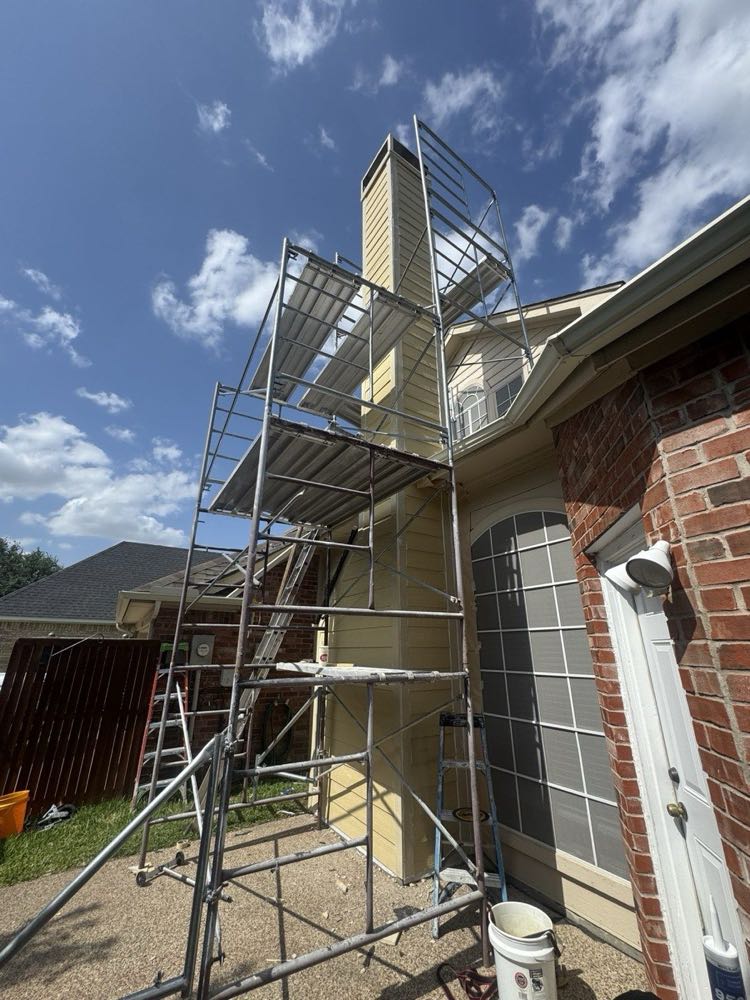
Your chimney is one of the hardest-working features on your home, and on a luxury property it is also one of the most visible. Every day it stands against Texas sun, sudden storms, and the surprising cold snaps that sweep across North Texas each winter. The brick tends to get all the attention, but the real workhorse is the mortar between the joints, the thin gray lines you rarely think about until they begin to fail.
When homeowners across Dallas–Fort Worth start noticing crumbling joints or a chimney that simply looks tired, two terms usually come up: tuckpointing and repointing. They are often used interchangeably, but they are not the same thing. Understanding the difference helps you protect your investment, preserve your home's appearance, and avoid the far larger expense of a full chimney rebuild.
Mortar does far more than hold bricks together. It is a flexible, sacrificial buffer designed to absorb movement, distribute weight, and, most importantly, keep water out of your chimney's structure. Brick and stone are strong in compression, but they are surprisingly porous. The mortar joints seal the gaps and create a continuous, weather-tight surface from the firebox all the way to the crown.
Because mortar is engineered to be slightly softer than the surrounding masonry, it wears first by design. That is intentional. It is far easier and less costly to renew mortar than to replace cracked brick. When those joints deteriorate, though, the protective seal breaks down and water begins to find its way in, which is exactly where trouble starts.
North Texas is uniquely hard on chimney mortar. Our summers push masonry to extreme surface temperatures, then a fast-moving storm can cool it dramatically within minutes. That rapid expansion and contraction stresses the joints again and again.
Winter brings the real culprit: the freeze-thaw cycle. When water seeps into a hairline gap and temperatures drop overnight, that moisture freezes and expands. As it thaws the next afternoon, it contracts. Repeat this dozens of times each season and even sound mortar begins to crack, crumble, and recede. Combined with the intense heat that radiates through a working chimney, DFW conditions can age mortar joints well ahead of schedule, especially on older or heavily used chimneys.
Here is the distinction that matters. Repointing is the structural repair: a mason carefully grinds out the deteriorated, crumbling mortar to a consistent depth and packs in fresh mortar, restoring the joints to full strength and sealing out water. It is about integrity and protection.
Repointing your chimney means the joints are restored, sealed, and structurally sound.
Tuckpointing is a refined, finished technique that builds on that repair. After the joints are filled, a mason applies a fine contrasting line, often called a fillet, into the fresh mortar to create a crisp, uniform, two-tone appearance. The result mimics the look of very thin, perfectly aligned joints, giving the masonry a tailored, elevated finish. In short, all tuckpointing includes the work of repointing, but tuckpointing adds a level of craftsmanship and visual polish that suits a luxury home. Our tuckpointing & repointing specialists handle both, matched to what your chimney genuinely needs.
Chimney mortar rarely fails overnight, which means the early signs are easy to catch if you know what to look for. On your next walk around the property, watch for:
Spalling in particular is a signal that water has already penetrated the masonry. If you are seeing flaking brick faces, our guide to spalling brick repair explains what is happening beneath the surface and why prompt action protects the rest of the structure.
Quality repointing and tuckpointing follow a deliberate sequence. First, a mason inspects the full chimney to gauge how deep the deterioration runs and where. Next, the failing mortar is ground out cleanly to a uniform depth, typically deeper than it looks from the ground, so the new mortar has a solid bed to bond with. The joints are cleared of dust and debris, then packed with fresh mortar and tooled to the correct profile.
For tuckpointing, the finishing line is applied while the mortar is still workable, requiring a steady hand and real experience. The final joints are cured and cleaned so the chimney looks refined rather than patched. This is skilled masonry work, closely related to broader brick & masonry repair, and it rewards patience and craftsmanship at every step.
On a high-end property, a repair that looks like a repair is not a success. Mortar comes in different types and strengths, and using the wrong one can actually damage your brick. Mortar that is too hard will not flex with the masonry, forcing the surrounding brick to absorb stress and spall as a result. Matching the correct mortar type protects the structure.
Matching the color and joint profile protects the appearance. A skilled mason blends new mortar to the existing tone and texture so the restored joints disappear into the original masonry. Done properly, no one can tell where the repair begins, and your chimney simply looks as it should: seamless, intentional, and worthy of the home it crowns. This is where Where Chimneys Meet Luxury stops being a slogan and becomes a standard.
The single greatest threat to any masonry chimney is water, and deteriorated mortar is its open door. Once moisture moves past the joints, it saturates brick, corrodes internal components, and accelerates freeze-thaw damage from the inside out. Left unaddressed, what began as a few crumbling joints can compromise the entire structure and lead to a partial or full rebuild, one of the most expensive repairs a homeowner can face.
Timely repointing, and tuckpointing where the finish calls for it, seals that door before serious damage takes hold. It is the difference between a modest maintenance visit and a major reconstruction. If you have noticed any of the warning signs above, the smart move is a professional assessment before the next hard freeze. Every project begins with a free, no-obligation estimate, so you can understand exactly what your chimney needs with no pressure and no surprises.
Not exactly. Repointing is the structural repair, grinding out failed mortar and packing in fresh mortar to restore strength and seal out water. Tuckpointing includes that repair, then adds a fine contrasting line for a crisp, refined two-tone finish. All tuckpointing involves repointing, but tuckpointing adds a level of craftsmanship suited to luxury homes.
It varies with age, exposure, and use, but North Texas freeze-thaw cycles and summer heat tend to age mortar faster than many homeowners expect. A good rule is to have your joints inspected whenever you notice crumbling or receding mortar, and otherwise as part of routine chimney care. Catching it early keeps the repair small.
Failing joints let water into the masonry, which accelerates spalling, loosens brick, and can corrode internal components. Over time this can compromise the whole structure and lead to a costly partial or full rebuild. Addressing mortar early is far less expensive than reconstructing a chimney later.
Using the wrong mortar type can actually harm your brick, because mortar that is too hard forces the surrounding masonry to absorb stress and spall. Matching the correct type protects the structure, while matching the color and joint profile keeps the repair invisible, preserving the seamless look a luxury home deserves.
Yes. Every project with Texan Flue begins with a free, no-obligation estimate. We assess your chimney, explain whether repointing or tuckpointing is the right approach, and give you clear pricing with no pressure and no surprises before any work begins.
When your chimney's mortar starts to show its age, protect your home and your investment with a free, no-obligation estimate from Texan Flue at (469) 771-7000.
Treat it that way — book a free estimate and see exactly what's going on inside.
Get a Free Estimate