
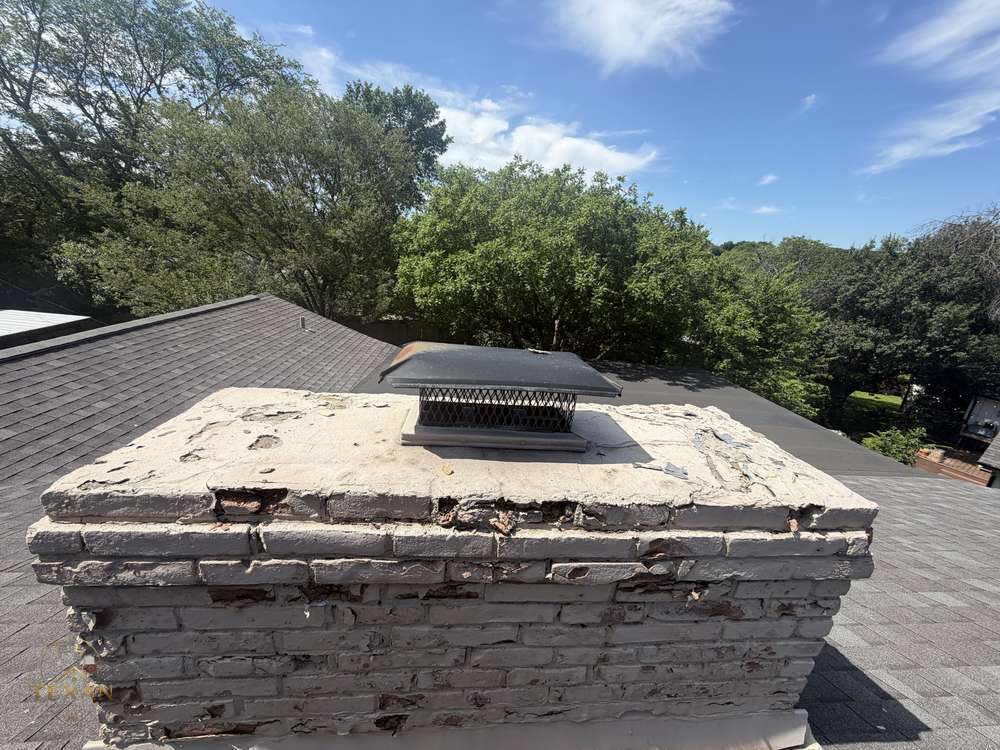
You step into the backyard, glance up at the chimney, and there it is: a chalky, white haze creeping across the brick. It looks a little like frost that never melted, or a splash of dried paint. Most Dallas–Fort Worth homeowners assume it's just dirt or a cosmetic blemish and reach for the hose. Unfortunately, that white bloom is telling you something far more important.
The stain has a name: efflorescence. And while it isn't dangerous to touch, it is one of the clearest early warnings that water is moving through your masonry where it shouldn't be. At Texan Flue, we treat efflorescence as a symptom to investigate, not a smudge to scrub away. Here's what those white stains actually mean and what a proper fix looks like.
Efflorescence is a deposit of natural salts left behind on the surface of brick, stone, or mortar. Masonry materials contain soluble mineral salts by nature. When water gets inside the chimney, it dissolves those salts and carries them along as it travels through the brick. Once that moisture reaches the surface and evaporates into our dry Texas air, the water disappears but the salt stays put, crystallizing into the powdery white film you see.
In other words, efflorescence is a fingerprint left by moving water. The salt itself is harmless. The moisture that delivered it is the real story, because for those salts to reach the outside of your chimney, water first had to find a way into the masonry.
This is the part homeowners most often get wrong. Efflorescence is not a stain that appeared on its own; it is physical evidence of a moisture problem hidden inside your chimney structure. A dry, watertight chimney does not produce efflorescence. If salts are blooming on the surface, water is actively migrating through the brick and mortar.
That matters because chimney masonry is not meant to stay wet. Trapped moisture slowly breaks down mortar joints, corrodes metal components, and sets the stage for far more expensive damage. The white bloom is essentially your chimney raising its hand and saying, water is getting in here. Ignoring it doesn't make the water go away; it just gives the moisture more time to do damage out of sight.
DFW weather is tough on masonry. Long dry spells followed by heavy downpours, blowing rain, and the occasional winter freeze all push water into any opening a chimney offers. When we inspect chimneys showing efflorescence, the source is almost always one of these:
Frequently it's a combination of these working together, which is why guessing at the cause rarely solves the problem for good.
It's tempting to blast the white film off with a pressure washer and call it finished. Please don't. Pressure-washing efflorescence is the equivalent of silencing a smoke alarm without checking for fire. You remove the visible symptom while the underlying leak keeps working.
Worse, high-pressure water actively harms masonry. It forces even more moisture into the brick, erodes already-weakened mortar joints, and can chip the brick face. Harsh cleaning also strips the surface in a way that makes it thirstier for water afterward. Within weeks, the efflorescence returns, often worse than before, because the real problem was never touched. The stain isn't the disease; it's the fever.
Solving efflorescence for good is a two-step process, and the order matters. First, find and repair the source of the water. That means a thorough inspection to identify whether it's a missing cap, a failing crown, compromised flashing, deteriorated mortar, or a combination. Stopping the intrusion at its source is non-negotiable; nothing else works until the water is shut out.
Second, once the chimney is repaired and fully dried, we apply a breathable, water-repellent sealant. This is the crucial detail most homeowners miss. A proper chimney sealer is vapor-permeable: it blocks liquid rain from getting in while still allowing any existing moisture and vapor to escape. A cheap, non-breathable paint or coating traps water inside the brick and accelerates the very damage you're trying to prevent. Professional chimney waterproofing uses the right breathable product applied at the right time, after repairs, never as a cover-up over an active leak.
Left alone, the moisture behind efflorescence keeps compounding. The most common progression we see in DFW is spalling: as trapped water saturates the brick, the surface begins to flake, pop, and crumble away. Once brick spalls, there is no scrubbing it back; the damaged units have to be replaced. You can read more about that in our guide to spalling brick repair.
Our winter freeze-thaw cycles make it worse. Water inside the masonry expands as it freezes and contracts as it thaws, prying the brick apart from within a little more with each cold snap. Over time this weakens mortar joints, deteriorates the crown further, and can compromise the structural integrity of the whole stack. A chimney that could have been protected with a modest waterproofing job can turn into a multi-thousand-dollar rebuild. That's the real cost of treating efflorescence as merely cosmetic.
The white salt deposit itself is harmless and won't hurt you. The danger is what it signals: water is actively moving through your masonry. That hidden moisture is what leads to spalling, mortar decay, and structural damage if the leak isn't found and repaired.
You can remove the surface bloom, but it will return until the water source is fixed. Avoid pressure-washing, which forces more moisture into the brick and can damage the masonry. Cleaning treats the symptom, not the leak causing it.
In DFW the usual culprits are a missing or damaged chimney cap, a cracked crown, failed flashing at the roofline, or unsealed porous brick. Often it's more than one at once, which is why a proper inspection is the best way to pinpoint the source.
Yes, when it's done correctly and in the right order. We first repair the leak, then apply a breathable, water-repellent sealant that blocks rain while letting existing moisture escape. Sealing over an active leak or using a non-breathable coating only traps water and makes things worse.
Our inspections are straightforward: a Camera inspection is $49, a Level 1 is $99, a Level 2 is $199, and a Level 3 is $299. If repairs or waterproofing are needed, we provide a free, no-obligation estimate before any work begins.
Don't let a little white stain turn into a major rebuild. Schedule your Texan Flue chimney inspection today and protect your home the luxury way by calling (469) 771-7000.
Treat it that way — book a free estimate and see exactly what's going on inside.
Get a Free Estimate