
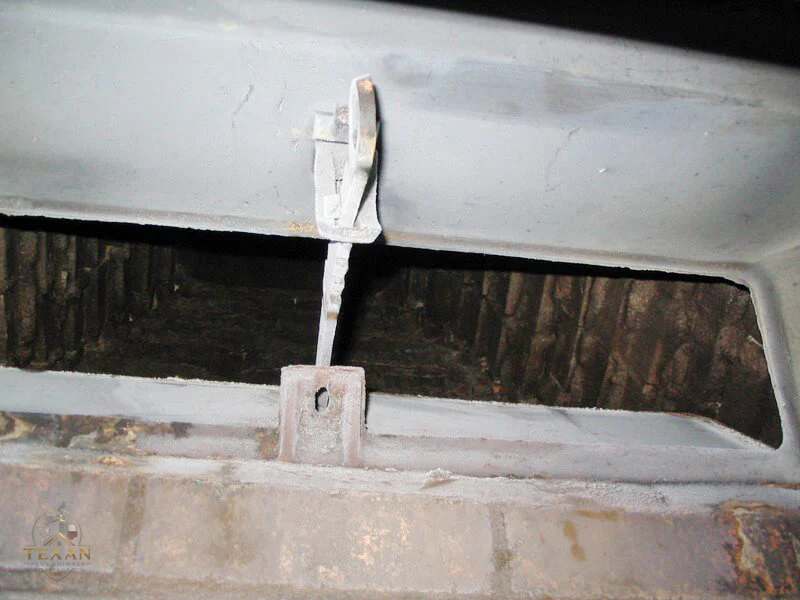
Few things interrupt a cozy evening faster than a chimney damper that refuses to budge. You reach for the handle, expecting that satisfying click as the flue swings open, and instead you meet stubborn resistance, or worse, complete silence from a mechanism that won't move at all. In a Dallas-Fort Worth home, a stuck damper is more than an inconvenience. It is a comfort problem, an energy problem, and in some cases a genuine safety hazard.
At Texan Flue, we believe a luxury fireplace should perform as beautifully as it looks. Understanding why your damper is stuck, and knowing when to repair versus replace it, is the first step toward restoring effortless, elegant function to your hearth. Here is what every DFW homeowner should know.
Before you can fix a stuck damper, it helps to know which kind you have. There are two main styles, and each behaves differently when it fails.
Knowing your damper type tells us a great deal about why it is sticking and what the ideal repair or upgrade path looks like.
Dampers do not fail without a reason. In the DFW climate, with its humidity swings and heavy seasonal use, we see the same culprits again and again.
A professional inspection pinpoints the exact cause so the right fix is applied the first time.
An open or poorly sealing damper is essentially a window in your roof left open year-round. When it will not close, or seals loosely because of rust and warping, your conditioned air escapes straight up the flue.
In the Texas summer, expensive cool air pours out while hot, humid air seeps in. In winter, warm air rushes upward and cold drafts spill into the room. Studies have shown that a leaky throat damper can waste a meaningful share of a home's heating and cooling energy, quietly inflating your utility bills every single month. A tight-sealing damper pays for itself in comfort and savings, which is why so many of our clients treat damper performance as an efficiency upgrade, not just a repair.
This is the rule that matters most. Never light a fire when the damper is closed or stuck shut. With no path for smoke and gases to escape, your home fills with smoke and, far more dangerously, colorless and odorless carbon monoxide.
If your damper will not open and you are unsure of its position, do not build a fire to test it. Instead, keep the fireplace unused and call a professional. We also recommend working carbon monoxide detectors on every level of your home. A stuck damper is a signal to pause and get it checked, not a challenge to power through. A quick chimney sweep and inspection restores safe operation and peace of mind.
Not every stuck damper needs to be replaced, and not every damper is worth saving. Here is how we help DFW homeowners decide.
Our team offers professional damper repair & installation and will always give you a straightforward recommendation with a free, no-obligation estimate, so you can choose with confidence.
When replacement is on the table, we often guide clients toward a top-sealing damper, and for good reason. Mounted at the top of the flue with an airtight silicone gasket, it delivers benefits a traditional throat damper simply cannot match.
For the luxury homeowner, a top-sealing damper is where performance, efficiency, and lasting quality meet, exactly the standard we hold at Texan Flue.
We keep our inspection pricing transparent: a Camera inspection is $49, a Level 1 inspection is $99, a Level 2 is $199, and a comprehensive Level 3 is $299. Any repair work, including damper repair, comes with a free, no-obligation estimate.
Light surface soot is sometimes wiped away by a homeowner, but rust, warping, creosote glaze, and broken mechanisms call for professional tools and training. Because a stuck damper carries carbon monoxide risk, we strongly recommend an insured technician diagnose and repair it safely.
Yes. Never burn a fire when the damper is closed or stuck shut. Smoke and carbon monoxide have no way to escape and can fill your home. Keep the fireplace unused until a professional restores proper damper function.
It depends on the damper's condition. Buildup, broken handles, and minor rust are usually repairable. A warped, corroded, or poorly sealing plate is better replaced. Our technicians assess it and provide a clear recommendation with a free, no-obligation estimate.
For most luxury homes, yes. Top-sealing dampers create a far tighter seal than throat dampers, slashing energy loss while also keeping out rain, debris, and animals. Their stainless-steel build resists corrosion, making them a durable, efficient long-term investment.
Do not let a stuck damper drain your comfort or your energy budget. Schedule your inspection or free damper repair estimate with Texan Flue today by calling (469) 771-7000.
Treat it that way — book a free estimate and see exactly what's going on inside.
Get a Free Estimate