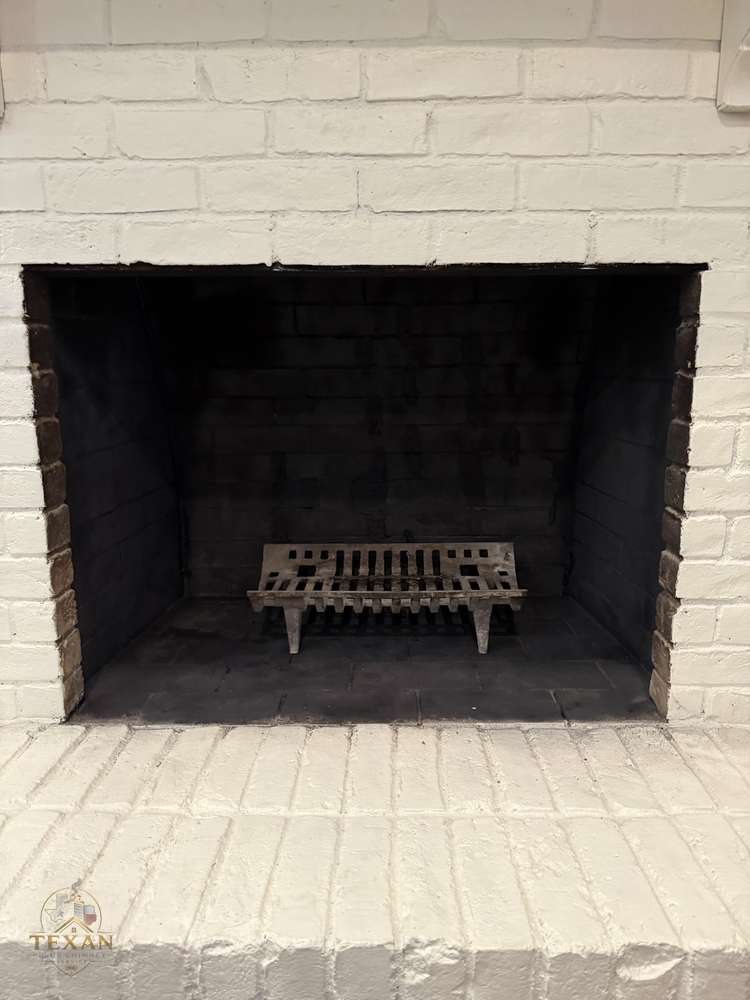
There are few things less welcome in a beautifully appointed home than the acrid smell of woodsmoke curling out of the fireplace and settling into your furniture, drapes, and lungs. A fireplace is meant to draw smoke up and out, quietly and completely. When it starts pushing smoke back into the room instead, something in the system is working against you, and it rarely fixes itself.
At Texan Flue, we see this problem in luxury homes across Dallas-Fort Worth every heating season. The good news is that smoke rollback almost always traces back to a handful of understandable causes. Below, we walk through why it happens, how to diagnose it, what you can safely try yourself, and when it is time to bring in an insured professional.
Before we chase the problem, it helps to understand the goal. A chimney works on a simple principle called draft: hot air rises. As your fire heats the air inside the flue, that warm column becomes lighter than the cool air outside and floats upward, pulling smoke and combustion gases along with it. A healthy chimney creates a steady, invisible upward current that carries everything safely above your roofline.
Anything that weakens, reverses, or blocks that upward current gives smoke somewhere else to go, and the path of least resistance is often right back into your living room. Nearly every cause on this list is really just one thing: a draft that is not strong enough to do its job.
In our experience across DFW, smoke rollback usually comes down to one or more of the following:
You can gather useful clues before you ever call a professional. Start by noticing when the smoke appears. If it rolls out immediately at lighting but clears once the fire is roaring, you are likely fighting a cold flue or draft reversal. If smoke builds steadily throughout the burn, suspect a blockage, an undersized flue, or a damper that is not fully open.
Try the backdraft test: hold a lit match or stick of incense just inside the open damper before lighting a fire. If the smoke is drawn up the flue, your draft is working. If it drifts into the room, cold air is flowing the wrong way. Next, run through the house and turn off any exhaust fans, then crack a nearby window and see if the smoke problem eases; if it does, negative pressure is your culprit. Finally, shine a flashlight up the flue to check for obvious nests, debris, or heavy black creosote coating the walls. A thorough inspection will confirm what these quick checks only hint at.
Several causes have safe, do-it-yourself remedies worth trying:
Quick fixes address symptoms. When the problem is structural, ongoing, or safety-related, it is time for an expert. Call an insured chimney professional if smoke persists after you have tried the steps above, if you see or smell heavy creosote, if the damper is stuck or damaged, or if you suspect an undersized flue, a missing cap, or a chimney that is simply too short.
At Texan Flue, we start with a clear, honest diagnosis. Our inspection options are transparently priced: a camera inspection at $49, a Level 1 inspection at $99, a Level 2 at $199, and a Level 3 at $299. If a blockage or creosote is behind your smoke, a professional chimney sweep clears the flue and restores your draft. If the damper is the weak link, our damper repair service gets it sealing and swinging properly again. Any repair we recommend comes with a free, no-obligation estimate, so you always know your options before spending a dollar.
Dallas-Fort Worth presents its own set of challenges. Our mild autumns mean chimneys often sit unused for months, giving birds, squirrels, and wasps plenty of time to build nests inside an open, capless flue before the first fire of the year. When that first cold front sweeps down from the north, homeowners light up and are met with a wall of smoke.
DFW's dramatic temperature swings, warm afternoons followed by sharply colder evenings, also make cold-flue draft reversal especially common here. And because so much of the new luxury construction across Frisco, Southlake, Colleyville, and the wider Metroplex is built exceptionally airtight, negative-pressure smoke problems are more frequent than many homeowners expect. A seasonal inspection before you burn is the simplest way to head off all of these issues.
This is almost always a cold flue causing draft reversal. The cold, heavy air sitting in your chimney flows downward until the fire heats it. Prime the flue with a rolled, lit newspaper held near the open damper before lighting, and the problem usually disappears once warm air begins rising.
Yes. A damper that is closed, partially open, warped, or rusted restricts airflow and traps smoke below it. Always confirm the damper is fully open before lighting a fire. If it will not open freely or does not seal when closed, our damper repair service can restore it.
Tightly sealed modern homes let exhaust fans, range hoods, and dryers pull air out faster than it can be replaced. That suction can overpower your chimney's draft and drag smoke into the room. Cracking a nearby window while burning usually solves it instantly.
We recommend an inspection once a year, ideally before the burning season begins. In DFW, long unused stretches invite nests and debris, and annual checks catch creosote buildup and blockages early. Our inspections start at just $49 for a camera inspection.
It can be. Beyond the odor and staining, smoke rollback means combustion gases, including carbon monoxide, are not venting properly. Persistent smoke often signals a blockage or creosote, which is also a fire hazard. If quick fixes do not resolve it, have an insured professional inspect the system promptly.
Tired of smoke in your living room? Let Texan Flue diagnose and restore your fireplace's draft, where chimneys meet luxury. Call us today at (469) 771-7000.
Treat it that way — book a free estimate and see exactly what's going on inside.
Get a Free Estimate